Learning Outcomes
i. Define dehydration synthesis and hydrolysis reactions.
ii. Explain how peptide linkages are formed and broken.
iii. Describe the enzymes that catalyze the formation and breakdown of peptide linkages.
iv. Discuss the importance of peptide linkages in protein synthesis and degradation.
i. Dehydration synthesis and hydrolysis reactions
Dehydration synthesis and hydrolysis are two types of chemical reactions that involve the transfer of a water molecule.
- Dehydration synthesis is a condensation reaction that removes a water molecule from two molecules to form a new bond between them.
- Hydrolysis is the reverse of dehydration synthesis, and it involves the addition of a water molecule to a molecule to break a bond.
ii. Formation of peptide linkages
Peptide linkages are formed by dehydration synthesis reactions between the amino group of one amino acid and the carboxyl group of another amino acid. The reaction is catalyzed by enzymes called peptidyl transferases.
The following is an example of a dehydration synthesis reaction that forms a peptide linkage:
Amino acid 1 + Amino acid 2 -> Peptide bond + Water
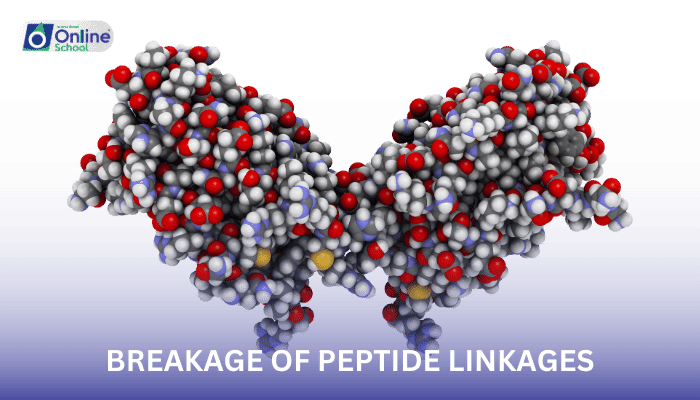
iii. Breakage of peptide linkages
Peptide linkages can be broken by hydrolysis reactions. Hydrolysis reactions are catalyzed by enzymes called proteases.
The following is an example of a hydrolysis reaction that breaks a peptide linkage:
Peptide bond + Water -> Amino acid 1 + Amino acid 2
iv. Importance of peptide linkages in protein synthesis and degradation
Peptide linkages are essential for protein synthesis and degradation. Peptide linkages are formed during protein synthesis to link amino acids together into a protein chain. Peptide linkages are broken during protein degradation to break down proteins into individual amino acids.
Real-world applications of peptide linkages
Peptide linkages are important for a variety of biological processes, including:
Protein synthesis: Peptide linkages are essential for the synthesis of proteins, which are the building blocks of life.
Protein degradation: Peptide linkages are also important for the degradation of proteins, which is necessary for recycling amino acids and eliminating damaged proteins.
Enzyme catalysis: Peptide linkages are essential for the function of enzymes, which catalyze all of the chemical reactions in cells.
Immune response: Peptide linkages are also important for the immune response, as antibodies are proteins that bind to antigens and help to eliminate pathogens.
Peptide linkages are also used in a variety of industrial applications, such as the production of food additives, pharmaceuticals, and other commercial product.
Peptide linkages are formed by dehydration synthesis reactions and broken by hydrolysis reactions. Peptide linkages are essential for protein synthesis and degradation.
